

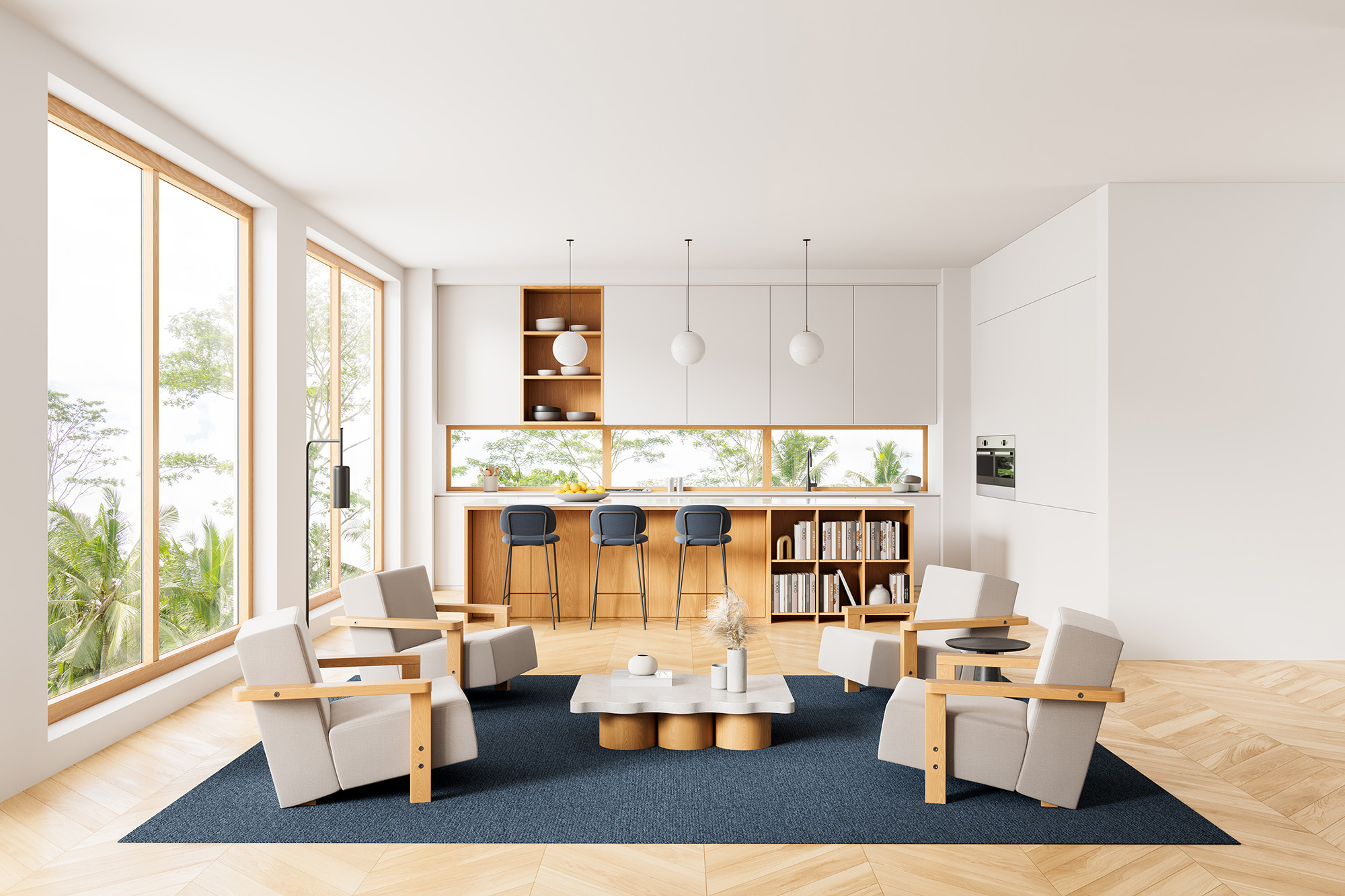
Authentic hardwood brings timeless warmth to a living room, but South Florida’s climate creates real challenges for solid timber. High humidity, concrete slab moisture, and tracked-in pool water quickly cause traditional wood to swell, cup, or buckle. Modern hard-surface manufacturing offers two exceptional wood-look alternatives that deliver the rich beauty of natural timber without constant maintenance worries.
Laminate and luxury vinyl plank (LVP) are top options for Palm Beach County homeowners. Both products reproduce wood grains, deep textures, and bevel-edge details with striking realism. Choosing the right material for your home comes down to subfloor conditions, room exposure, and how your family uses the space.
Core Construction Differences Under Local Moisture Pressure
The primary difference between laminate and LVP lies directly in their core materials. Laminate flooring features a high-density fiberboard (HDF) core made from compressed wood fibers bound with resin. While premium water-resistant laminates use tight-locking click joints and edge sealants to block surface spills, the inner core still contains natural wood material.
LVP uses a 100% waterproof composite core. Stone-plastic composite (SPC) and wood-plastic composite (WPC) cores contain zero wood fibers, making them completely impervious to water from above or below.
Ground-level homes in Boynton Beach, Lake Worth, and Delray Beach sit on concrete slab foundations built over high water tables. Concrete continuously releases moisture vapor into your living space. In high-humidity areas like kitchens, bathrooms, laundry rooms, and ground-floor entryways, LVP provides complete protection against moisture damage. Standing pool water tracked in from the backyard will not cause LVP planks to swell or delaminate. Laminate handles normal everyday spills wiped up promptly, but it fits best in upper-level bedrooms and formal living areas where standing water poses no threat.
Surface Wear, Scratch Resistance, and Intense UV Exposure
Living near the coast means dealing with abrasive beach sand, pet claws, and intense sunlight streaming through patio sliders. Both wood-look alternatives feature specialized wear layers designed to withstand daily household stress.
Hardness and scratch protection. Laminate features a melamine wear layer infused with aluminum oxide, giving it an extremely dense, hard surface shell. It resists deep scratches from dog nails, heavy foot traffic, and sharp sand grit far better than soft natural finishes.
Impact and dent absorption. LVP relies on a thick vinyl wear layer measured in mils, backed by a rigid composite core. While heavy metal tools dropped from a counter might chip a brittle laminate edge, LVP absorbs impacts without fracturing.
Sunlight fading resistance. Intense UV rays streaming into South Florida sunrooms can discolor organic finishes over time. Modern LVP collections, such as Nuvelle, include specialized UV-blocking top coatings that maintain original stain colors year after year.
Condo HOA Acoustic Mandates for Coastal Living
Updating a condo unit in Highland Beach or an oceanfront tower in Boca Raton calls for strict property management oversight. Condo boards enforce mandatory acoustic soundproofing rules to prevent footstep noise from disturbing neighbors on lower floors. You must ensure your new floor assembly meets specific performance ratings before installation begins.
Both floating laminate and click-lock LVP systems meet these bylaws when paired with high-density acoustic underlayments. Building boards dictate minimum ratings for IIC (Impact Insulation Class) and STC (Sound Transmission Class). Installing dense rubberized or acoustic foam underlayment underneath your planks dampens footfalls, absorbs hollow clicking sounds, and satisfies your building's IIC (Impact Insulation Class) and STC (Sound Transmission Class) standards cleanly. Moe and Ali handle these acoustic verification steps directly, ensuring your project passes board review without unexpected delays.
Authentic Texture and Underfoot Comfort
Visual realism has advanced dramatically across both product lines, but they offer distinct tactile experiences underfoot. Premium laminate leads slightly in surface depth due to embossed-in-register printing. This manufacturing process aligns physical surface ridges directly over printed wood grain patterns, mimicking hand-scraped knots and grain lines that feel identical to authentic hardwood. Laminate also feels firm and solid underfoot, closely resembling the rigid density of traditional oak or maple.
LVP provides a slightly warmer, softer feel under bare feet. The composite core offers subtle flexibility that absorbs step impact, making it comfortable to stand on while cooking in the kitchen. When walking across the floor with wet feet after a dip in the pool, LVP's textured wear layer provides dependable foot traction to prevent accidental slips.
Laminate vs. LVP: Make the Right Choice with Giant Carpet and Flooring
Selecting between laminate and LVP depends on your specific floor plan, foundation type, and lifestyle needs. Whether you need 100% waterproof protection for a pool-adjacent family room in Lantana or realistic hand-scraped textures for an upstairs master suite in Ocean Ridge, Giant Carpet and Flooring delivers tailored recommendations backed by local expertise. Working directly with owners Moe and Ali guarantees straightforward communication, quick project turnarounds, and master craftsmanship from start to finish.
Visit our showrooms in Boca Raton or Boynton Beach to compare laminate and LVP samples side by side. If you prefer to evaluate choices in your own home, schedule a shop-at-home appointment. We bring curated product lines directly to your door so you can review grain patterns and colors under your home’s natural light. Contact Giant Carpet and Flooring today to schedule your free estimate and find the perfect wood-look floor for your space.


